
Job Overview
Location: Peterborough, Ontario
Structure: Two-story detached house
Problem: Raccoons entering the attic through the roof area
Service: Humane raccoon removal and entry point exclusion
Visits: 3
Summary
We completed a three-visit humane raccoon removal service for a detached home in Peterborough after the homeowner reported noises from the attic. Technician Grant confirmed raccoon activity, inspected the attic for dependent young, and found none present. A one-way door was installed to allow the adult raccoon to leave safely while preventing re-entry. During the follow-up visit, the one-way door was removed and the primary entry point was permanently sealed. A later inspection determined that new attic noises were associated with existing rodent activity rather than a returning raccoon.
Background / Property Context
The homeowner reported raccoon activity in the attic of a two-story home with a clay tile roof. Roof features and elevated access points can provide sheltered entry locations when gaps develop around roof intersections and soffit areas.
Customer Concern
The homeowner wanted the raccoons removed humanely and the attic secured to prevent further wildlife entry.
Inspection & Findings
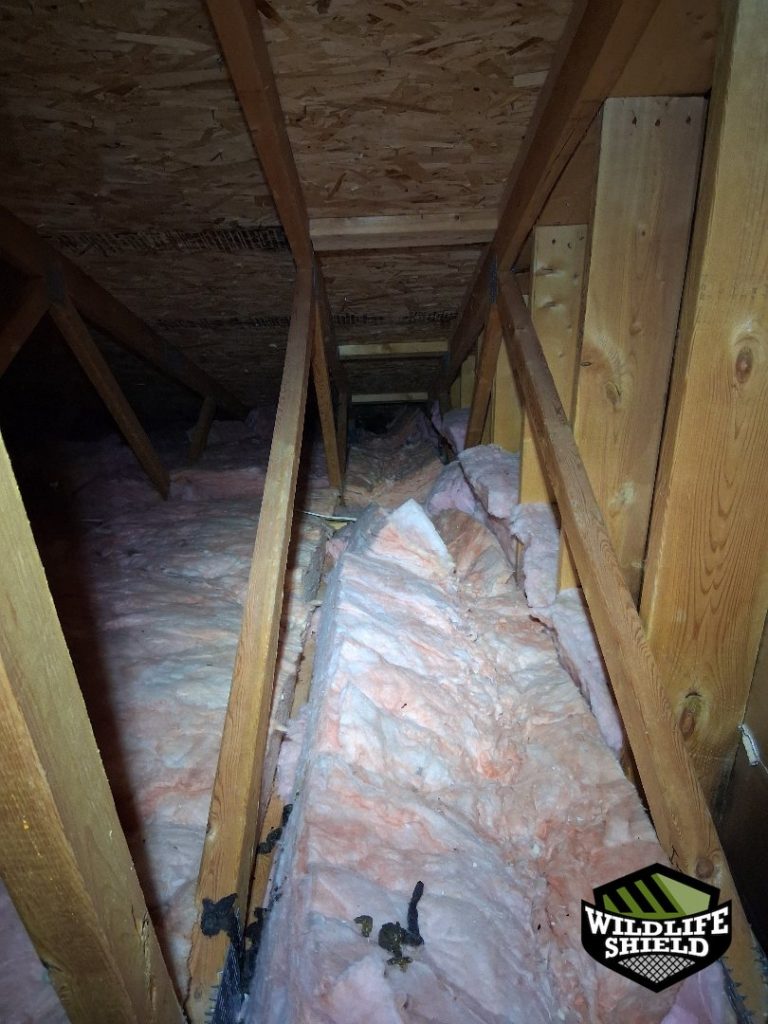
Grant completed a full attic and exterior roof inspection. The attic was carefully searched for dependent raccoon young, and none were found. Visible signs of raccoon activity were present, and a significant amount of rodent droppings was also observed in the attic insulation.
The photographs show:
- An attic with visible wildlife and rodent droppings on the insulation.
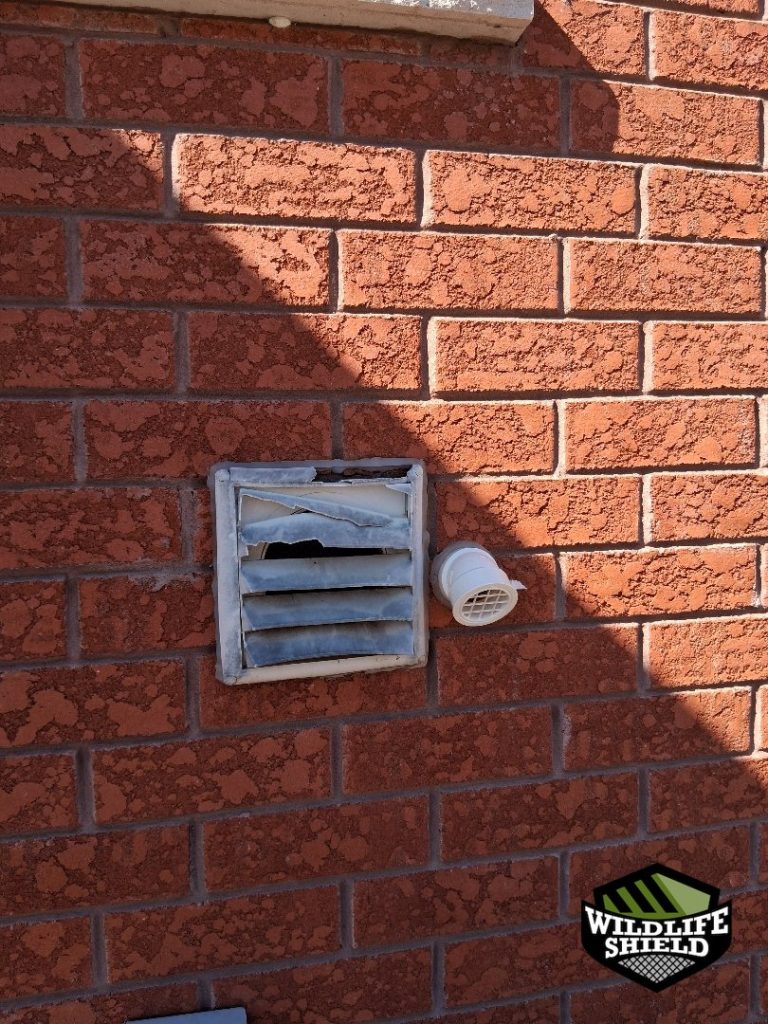
- A damaged exterior wall vent that could allow wildlife access if left unrepaired.
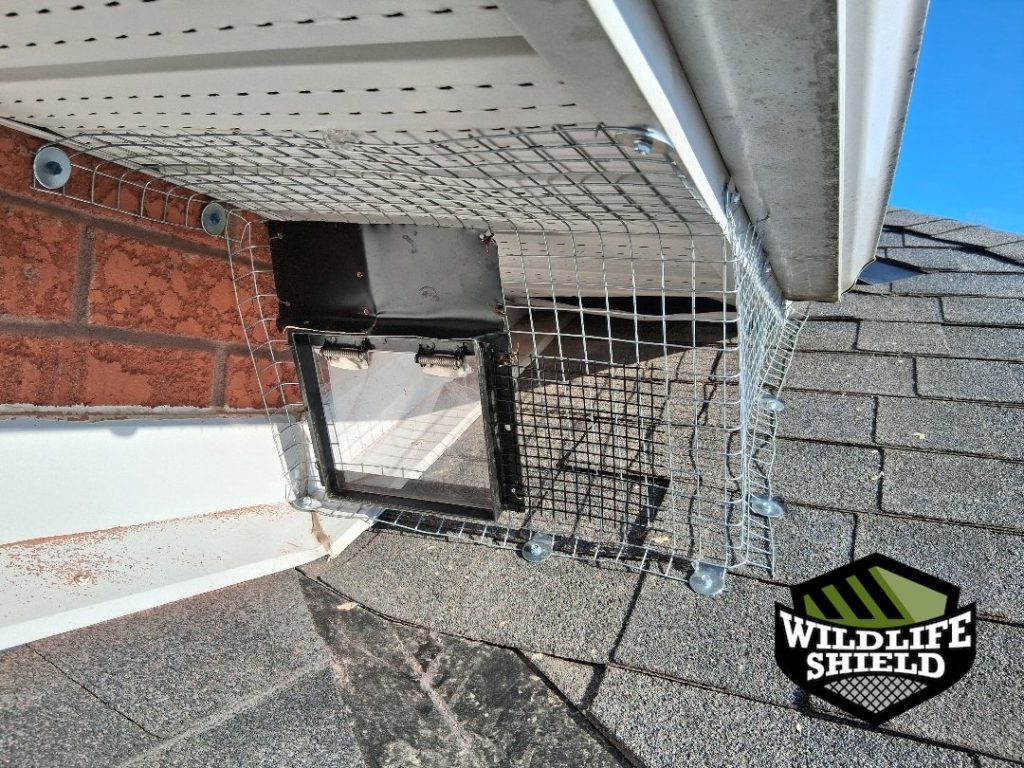
- A one-way door installed over the raccoon’s active entry point.
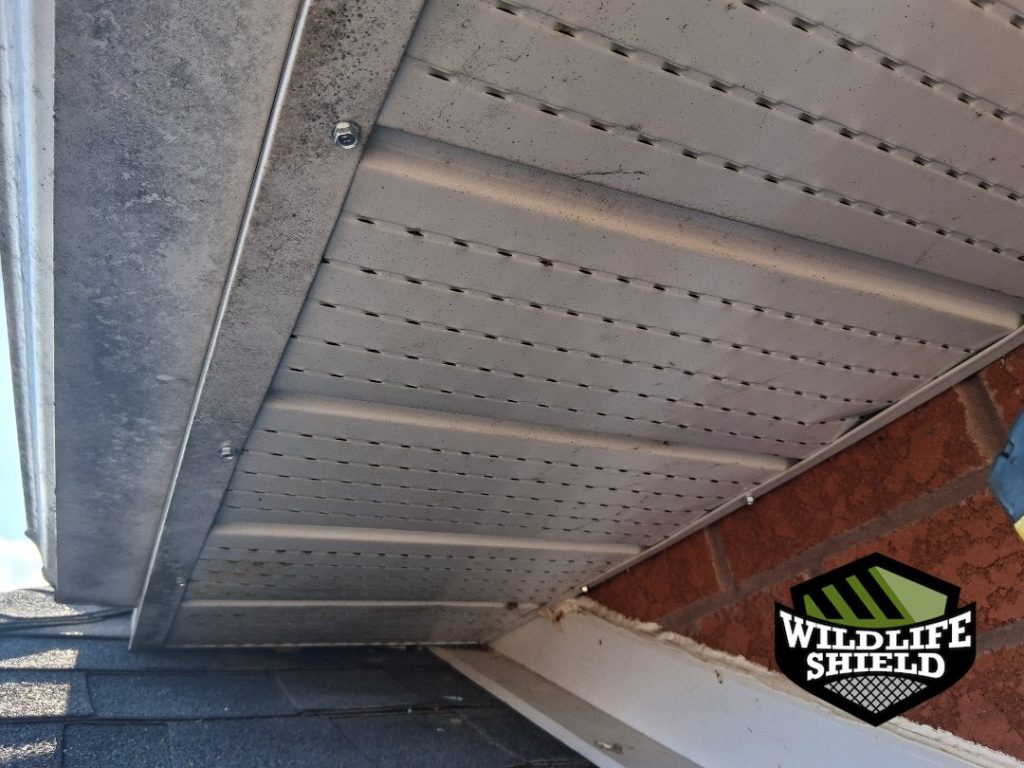
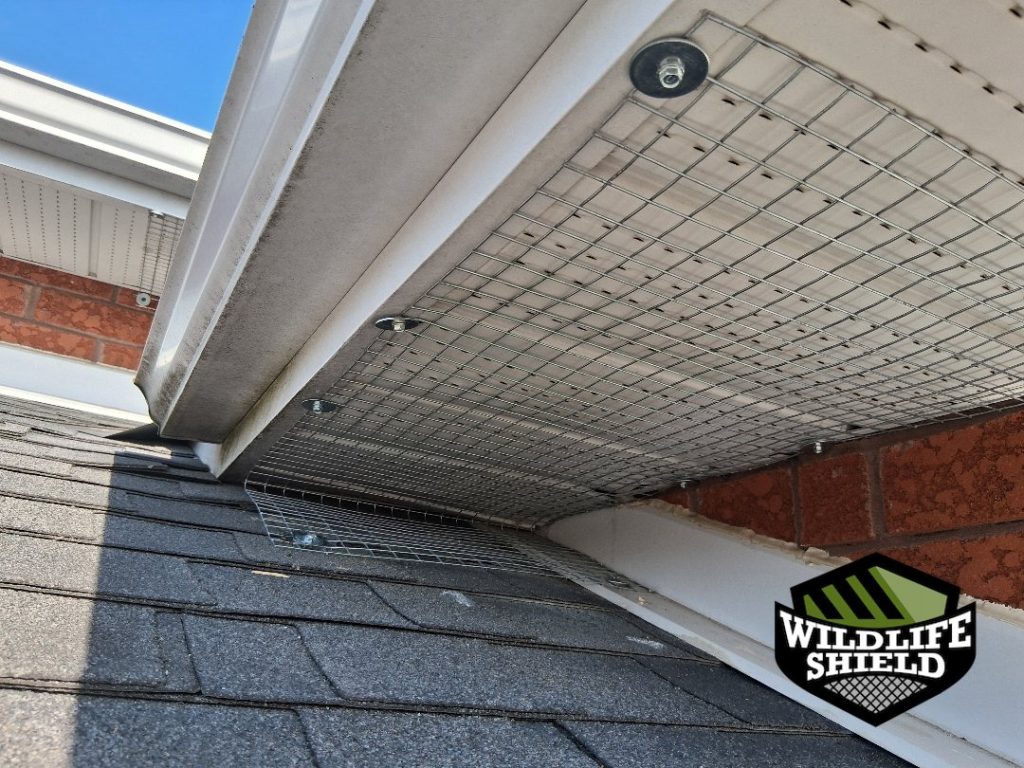
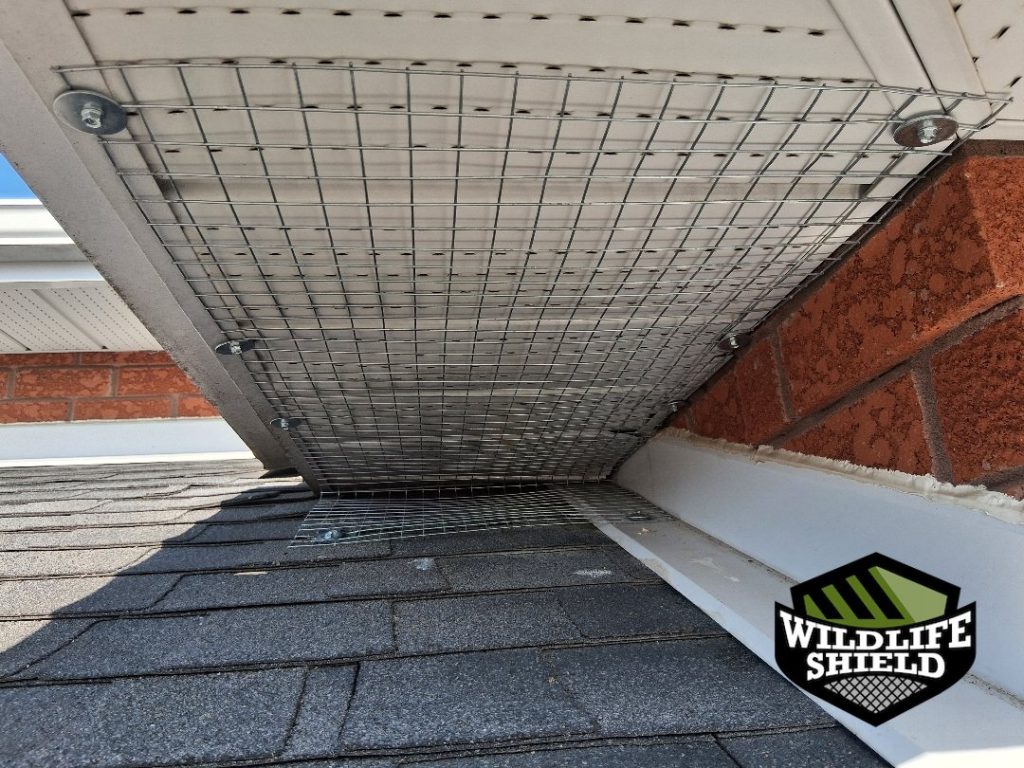
- Heavy-gauge galvanized steel mesh installed to reinforce vulnerable soffit areas.
- Completed exclusion work securing roofline openings.
Cause Analysis
Raccoons commonly access attics by exploiting weakened roof intersections, soffits, or other elevated openings that provide sheltered entry. Once inside, attic spaces offer protection from weather and predators. During the inspection, separate evidence of rodent activity was also observed, indicating that more than one wildlife issue had affected the attic.
Treatment / Removal
During the first visit, Grant confirmed raccoon activity and completed a humane removal process.
Work included:
- Inspection of the attic for raccoon young, with none found.
- Installation of a one-way door over the active raccoon entry point to allow safe exit while preventing re-entry.
- Documentation of additional rodent activity within the attic.
- Preparation of a quotation for additional exclusion work.
The homeowner elected to proceed only with the one-way door installation and the essential removal service at that time.
Exclusion & Repairs
At the second visit, no further raccoon activity was reported.
Our team:
- Confirmed the raccoon had exited the attic.
- Removed the temporary one-way door.
- Permanently sealed the primary entry point.
- Inspected the completed exclusion work to verify the repaired area remained secure.
The photographs show completed galvanized steel mesh reinforcement installed beneath the soffit and the repaired roof entry location following removal of the one-way door.
Outcome & Confirmation
Following completion of the removal process, the homeowner reported that raccoon noises had stopped. During a later inspection after additional attic noises were reported, Grant found no evidence of a new raccoon entry point or renewed raccoon activity. Based on the inspection findings and previously documented droppings, the remaining sounds were consistent with existing rodent activity in the attic. A quotation for rodent treatment was provided, but the homeowner chose not to proceed.
Technician Notes
Grant confirmed that no dependent raccoon young were present before installing the one-way door, allowing the adult raccoon to leave the attic safely. Follow-up inspection verified that the raccoon had not returned after the entry point was sealed. The attic inspection also documented significant rodent droppings, and although rodent treatment was recommended after the third visit, the homeowner declined additional service.