
Job Overview
Location: Oshawa, Ontario
Structure: Two-story detached house
Problem: Rat activity reported inside and around the property
Service: Rat removal, interior remediation, and exclusion
Visits: 3
Summary
We completed a three-visit rat removal program for a detached home in Oshawa after the homeowner reported rat activity both inside and around the property. Technician Grant confirmed evidence of rat activity, implemented an integrated treatment program, identified the primary entry point, and completed extensive exclusion and remediation work. During the final visit, monitoring confirmed that activity had ceased, temporary exclusion devices were removed, and the entry points were permanently sealed.
Background / Property Context
The homeowner had observed rat activity around the exterior of the property and was concerned about rodents entering the basement. A complete inspection of the home and surrounding exterior was performed to determine the extent of the activity and locate the primary access points.
Customer Concern
The homeowner wanted the existing rat problem resolved while preventing future rodents from entering the home through structural openings.
Inspection & Findings
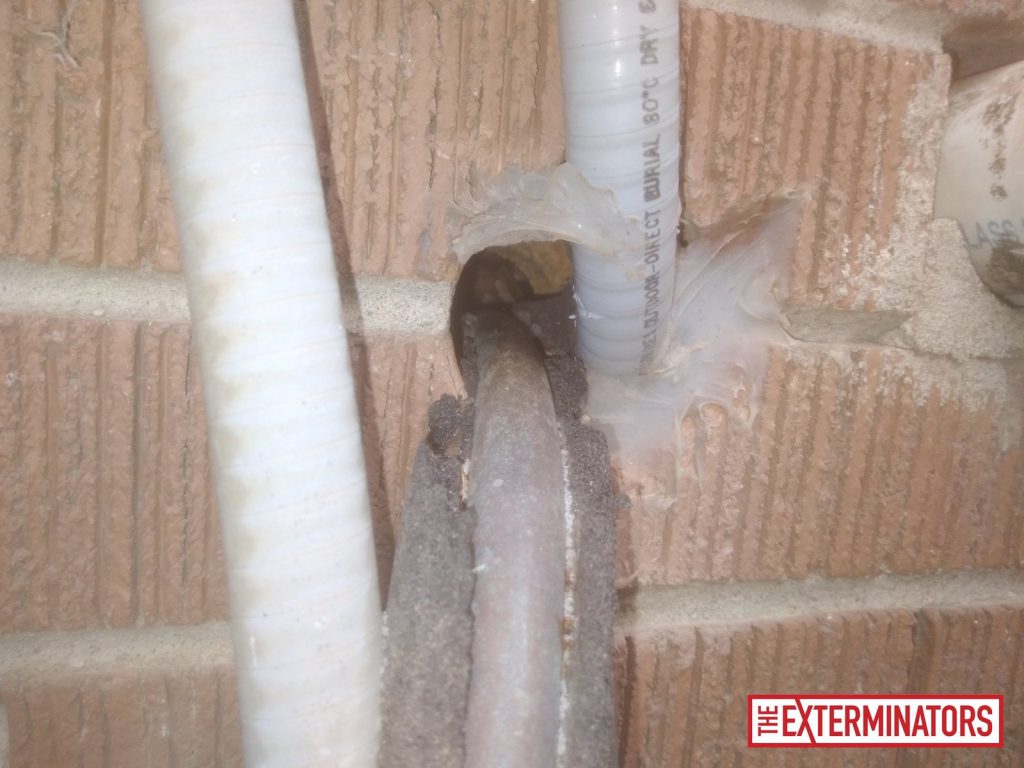
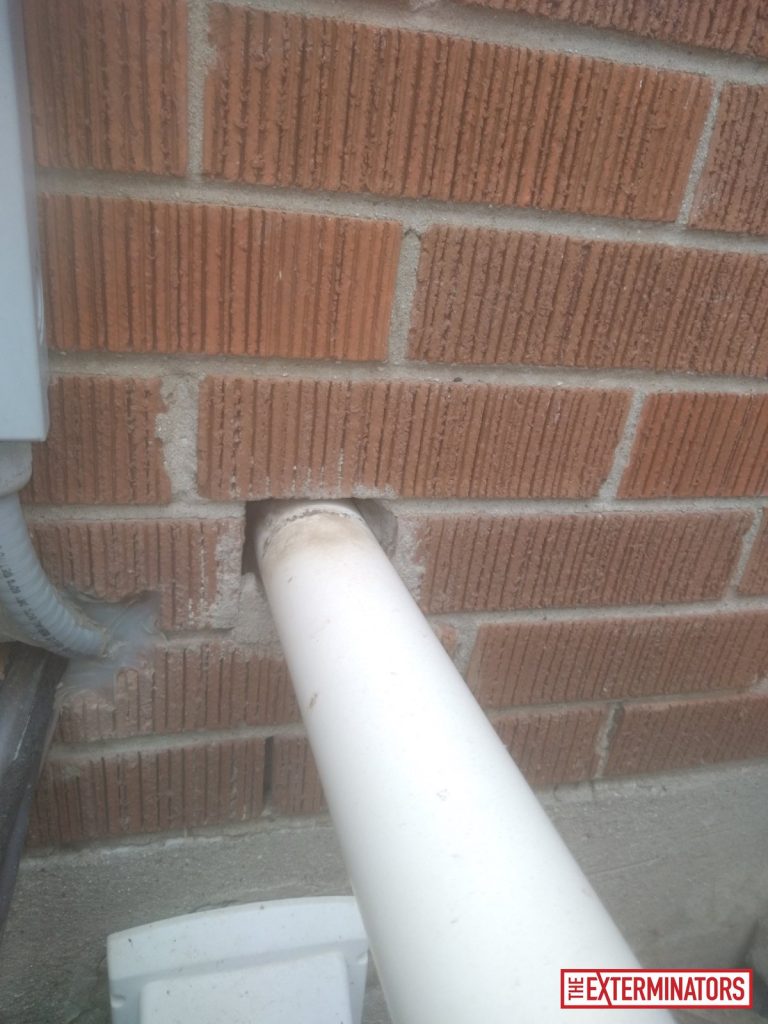
Grant completed a detailed inspection of both the interior and exterior of the property. Evidence of rat activity was identified, and several utility penetrations and structural gaps were found that could allow rodents to move between the exterior and the basement.
The photographs show:
- A tamper-resistant exterior bait station installed for ongoing rodent management.
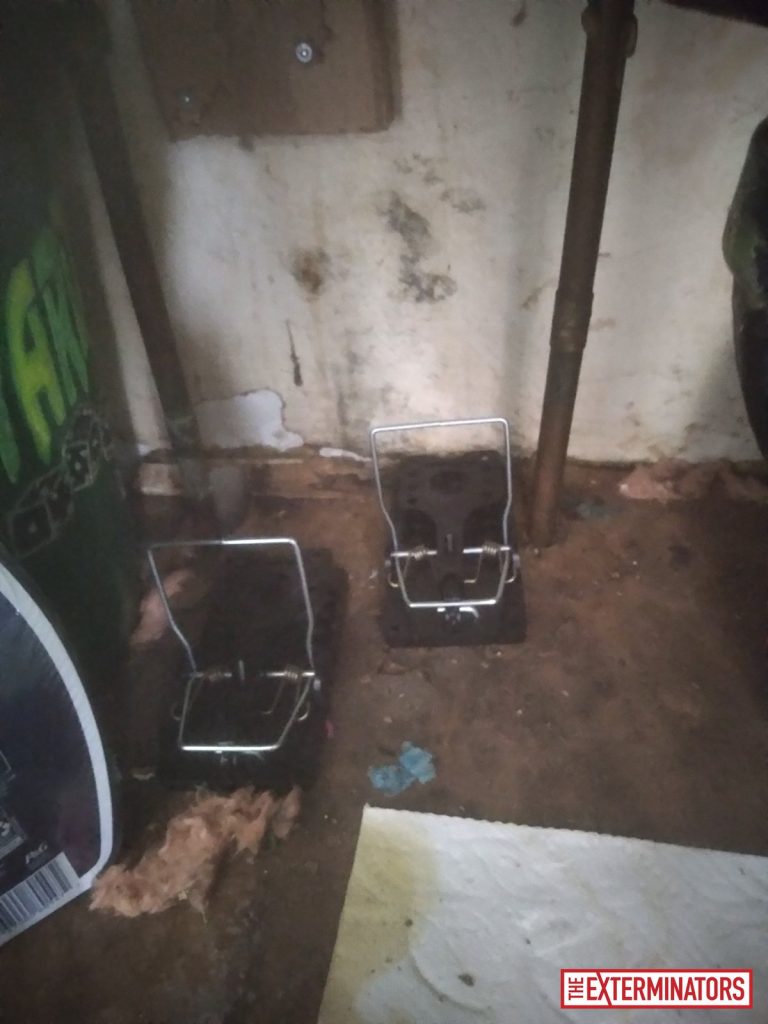
- Interior snap traps positioned in monitoring locations.
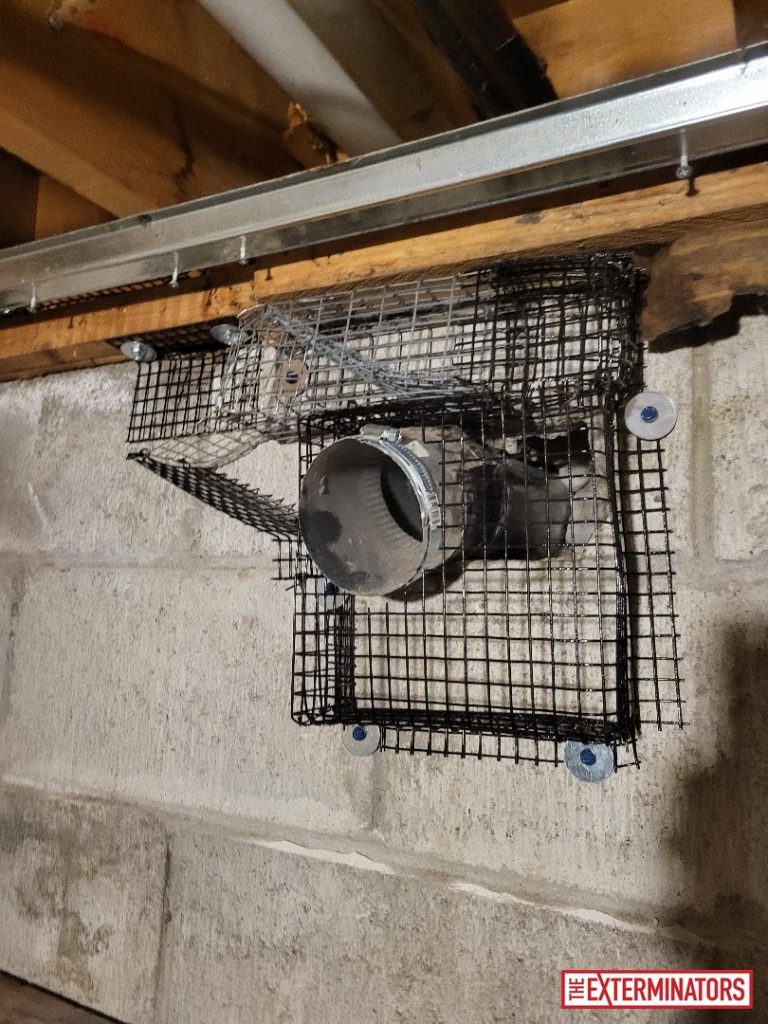
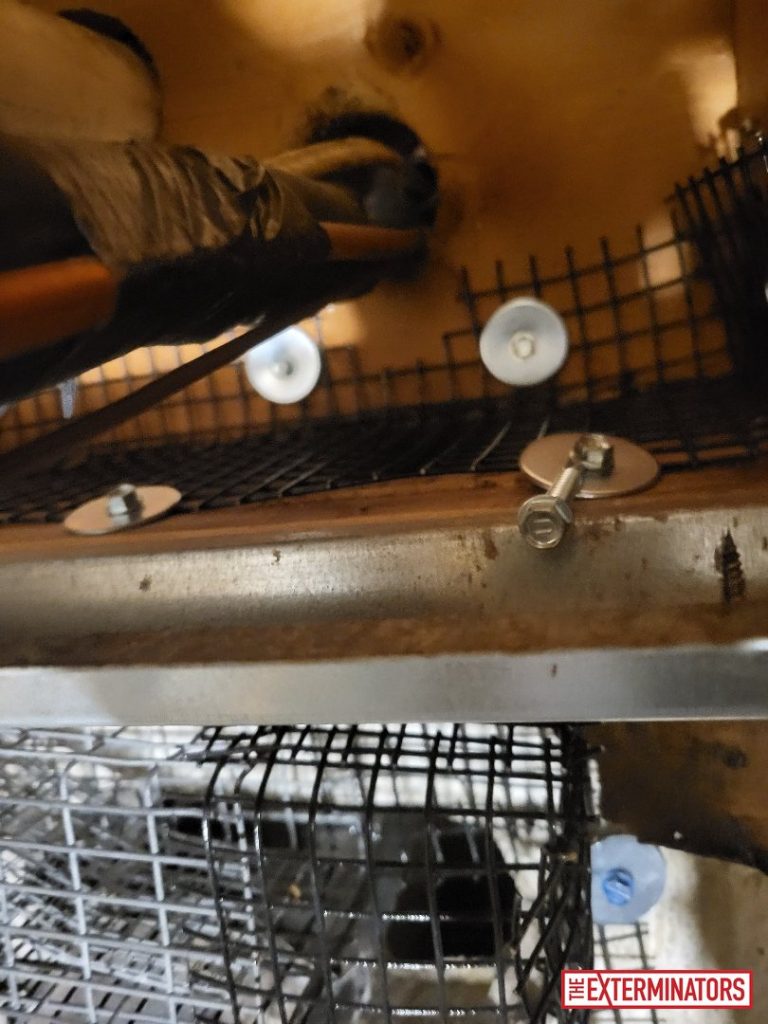
- A one-way door installed over the primary interior entry point.
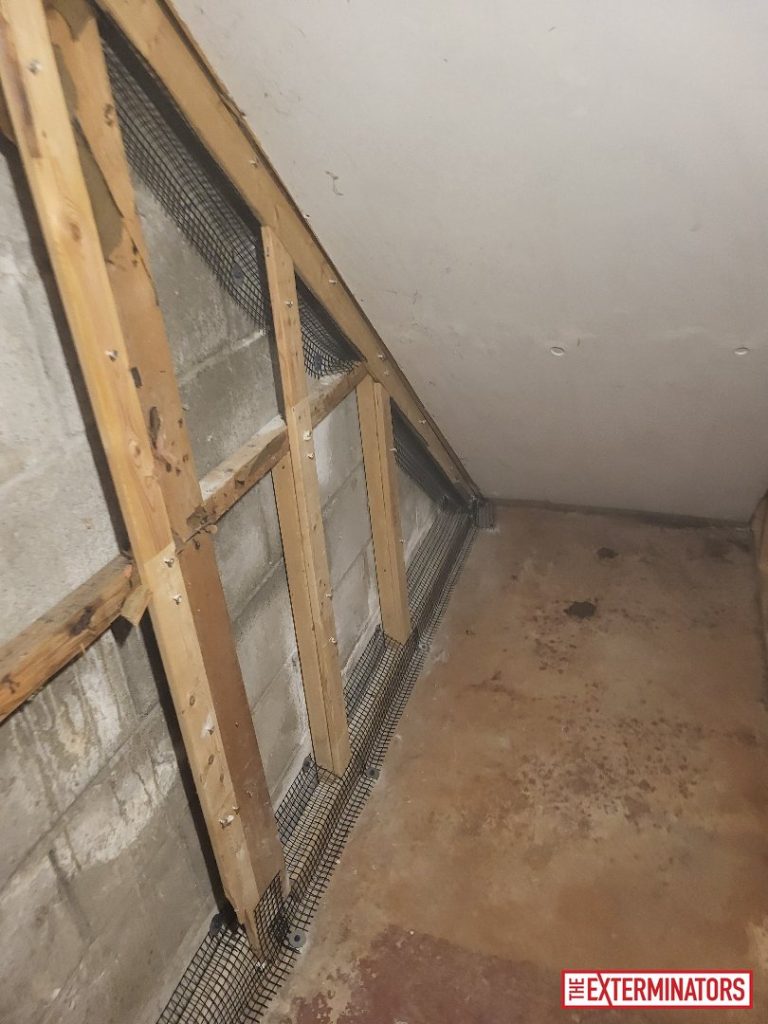
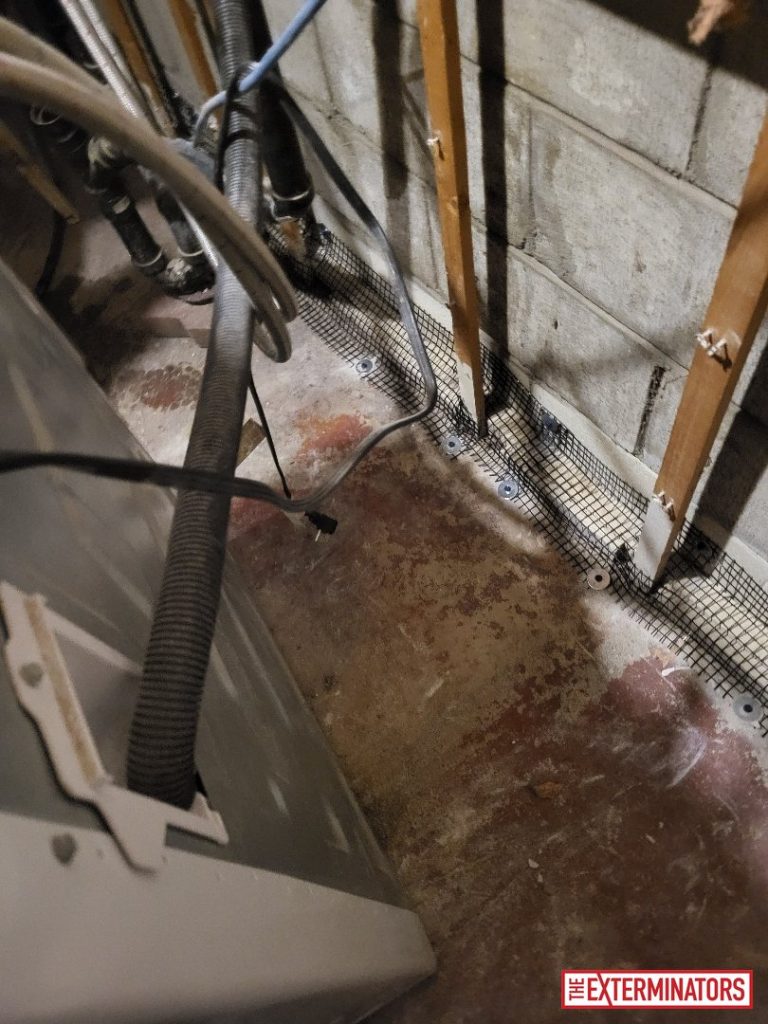
- Galvanized steel mesh installed along accessible foundation openings.
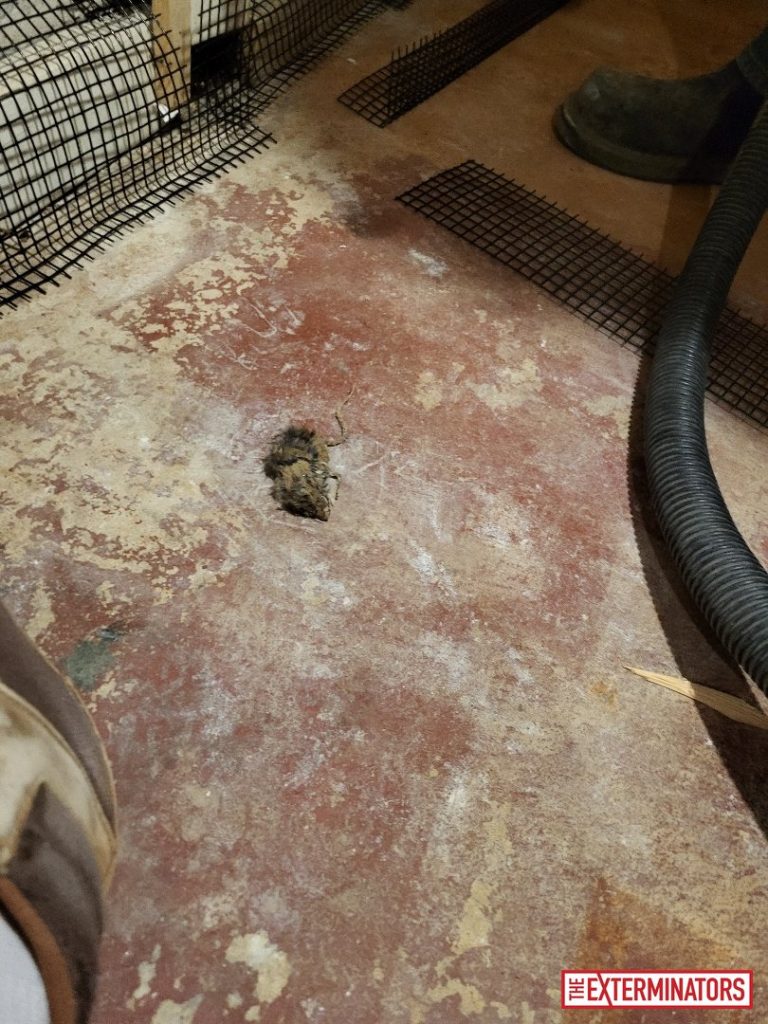
- Interior exclusion work completed along the foundation wall.
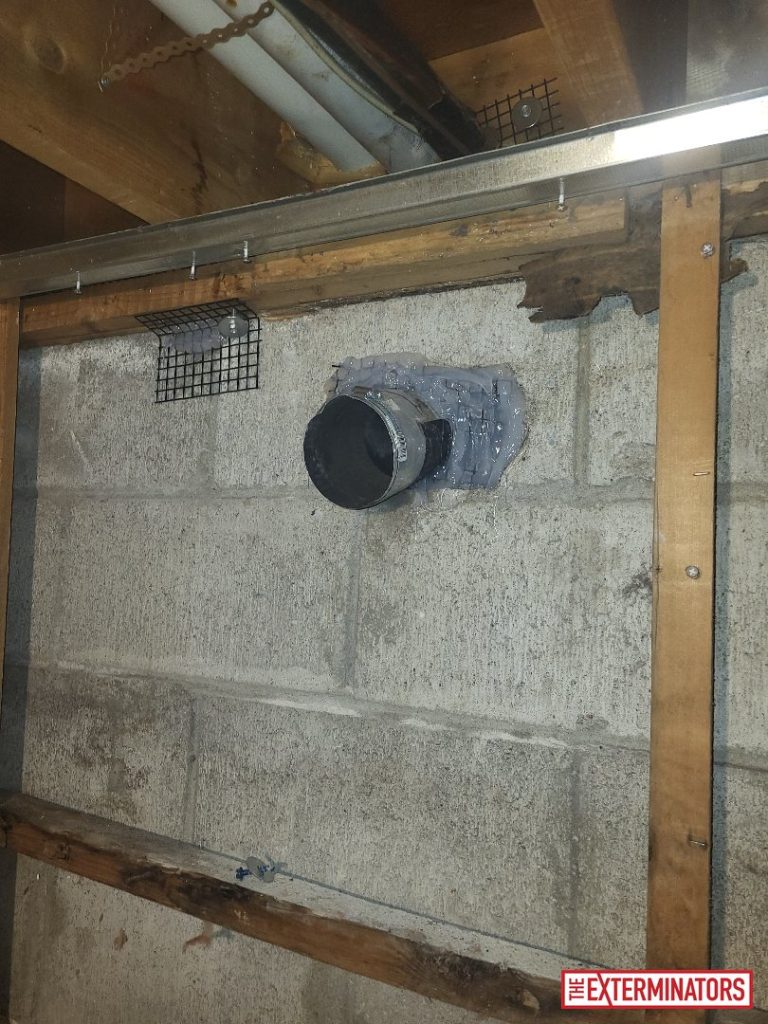
- Utility penetrations before and after permanent sealing.
- Areas cleaned following removal of contaminated materials.
Cause Analysis
Rats commonly enter homes through gaps around utility penetrations, foundation openings, and other small structural defects. Once access is established, unfinished basement areas can provide protected travel routes that allow rodents to move throughout the structure unless entry points are permanently excluded.
Treatment / Removal
During the initial visit, Grant confirmed rat activity and implemented an integrated rodent control program.
Treatment included:
- Installation of large weighted tamper-resistant exterior bait stations containing commercial-grade rodenticide.
- Placement of commercial-grade baited snap traps in appropriate interior monitoring locations.
- Inspection to identify active and potential entry points.
- Preparation of a quotation for permanent exclusion work.
All rodenticide applications were performed by a licensed exterminator in accordance with Ontario Ministry of the Environment guidelines.
Exclusion & Repairs
After the homeowner approved the recommended repairs, permanent exclusion work was completed during the second visit.
Work included:
- Installation of a rat one-way door at the primary interior entry point.
- Removal of approximately 240 feet of drywall and insulation where remediation was required.
- Removal of rodent droppings using a HEPA-filtered vacuum.
- Disinfection of affected areas using an industrial fogging system.
- Installation of galvanized steel mesh over accessible openings.
- Permanent sealing of utility penetrations and identified entry points.
The photographs show completed exclusion work, reinforced foundation protection, and sealed utility penetrations following repairs.
Outcome & Confirmation
During the final visit, the homeowner reported no further noises or signs of rat activity. We confirmed that monitoring showed no continued activity, removed the temporary one-way door, permanently sealed the remaining entry point, and inspected all completed exclusion work to verify the home had been secured.
Technician Notes
Grant identified the primary access point during the initial inspection and implemented a combination of commercial rodent control, structural exclusion, and interior remediation. The remediation work included removal of contaminated building materials, HEPA vacuuming, industrial disinfection, and permanent sealing of vulnerable entry points. Final monitoring confirmed that rat activity had been resolved and the exclusion work remained effective.