
Job Overview
Location: Peterborough, Ontario
Structure: Semi-detached split-level house
Problem: Dead mice found in multiple interior areas indicating significant activity
Service: Mouse treatment and exterior exclusion
Visits: 3
Summary
We were contacted regarding repeated sightings of dead mice inside the home. Our inspection confirmed a high level of mouse activity. Over three visits, we completed interior treatment using tamper-resistant bait stations and performed targeted exterior exclusion work to address confirmed entry points. Activity declined following treatment, and the sealed areas were confirmed effective at final inspection.
Background / Property Context
The structure is a semi-detached split-level home with brick exterior walls, aluminum soffits, and multiple weep vents along the foundation. The building features several roofline transitions and soffit returns typical of this style of construction.
These architectural elements can create small structural gaps over time, particularly at soffit-to-brick transitions and utility penetrations.
Customer Concern
The homeowner reported finding dead mice in several areas of the interior. Based on frequency and distribution, there was concern that a substantial infestation was present within wall voids or ceiling spaces.
The goal was to eliminate the existing population and identify how mice were entering the structure.
Inspection & Findings
During the initial visit, our technician Grant completed a full interior and exterior inspection.
Interior findings indicated a high level of mouse activity consistent with an established infestation.
Exterior inspection identified multiple potential entry points, including:
-
One accessible wall vent
-
Approximately 35 linear feet of soffit-to-wall gaps
-
21 open foundation weep vents accessible to mice
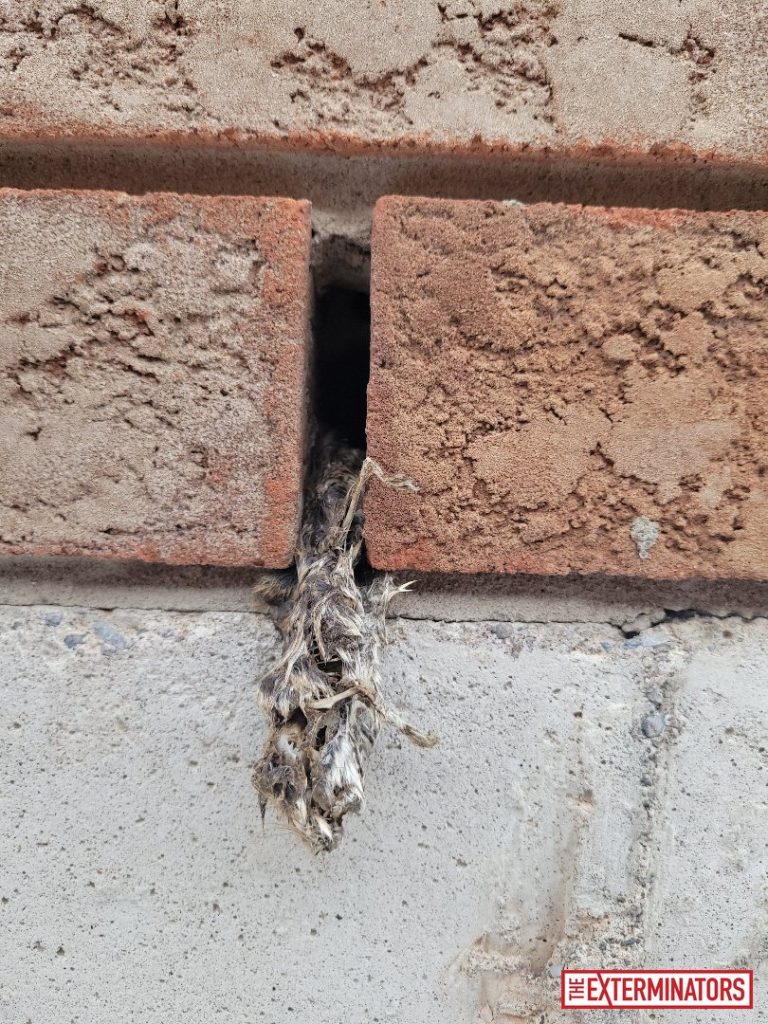
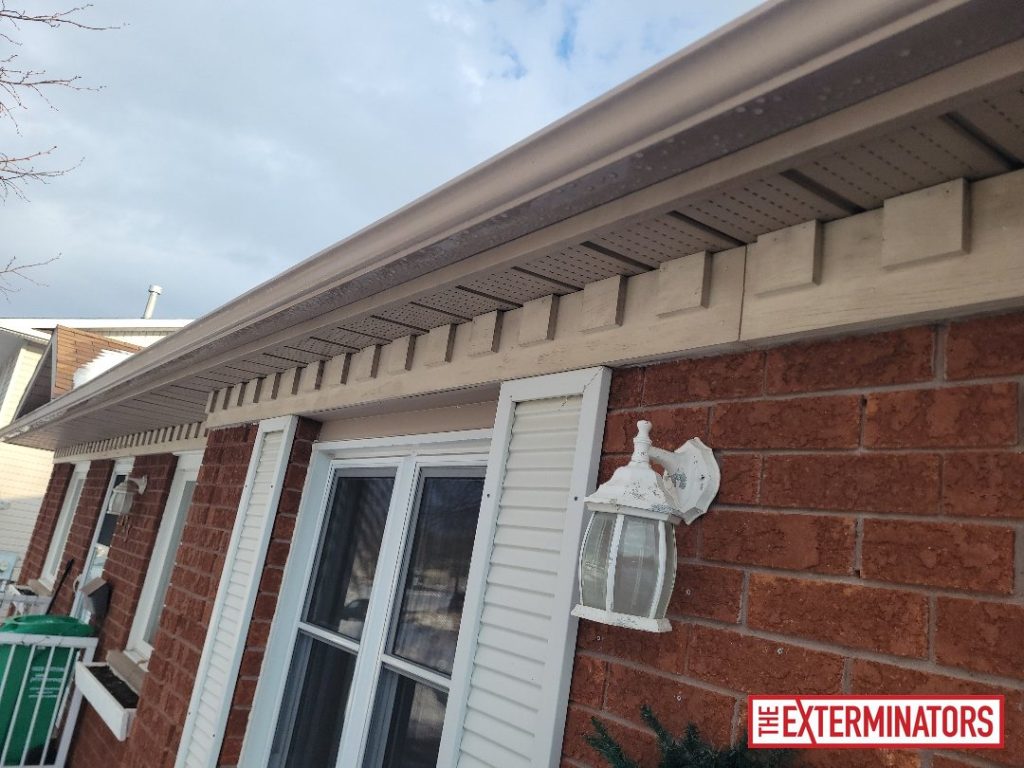
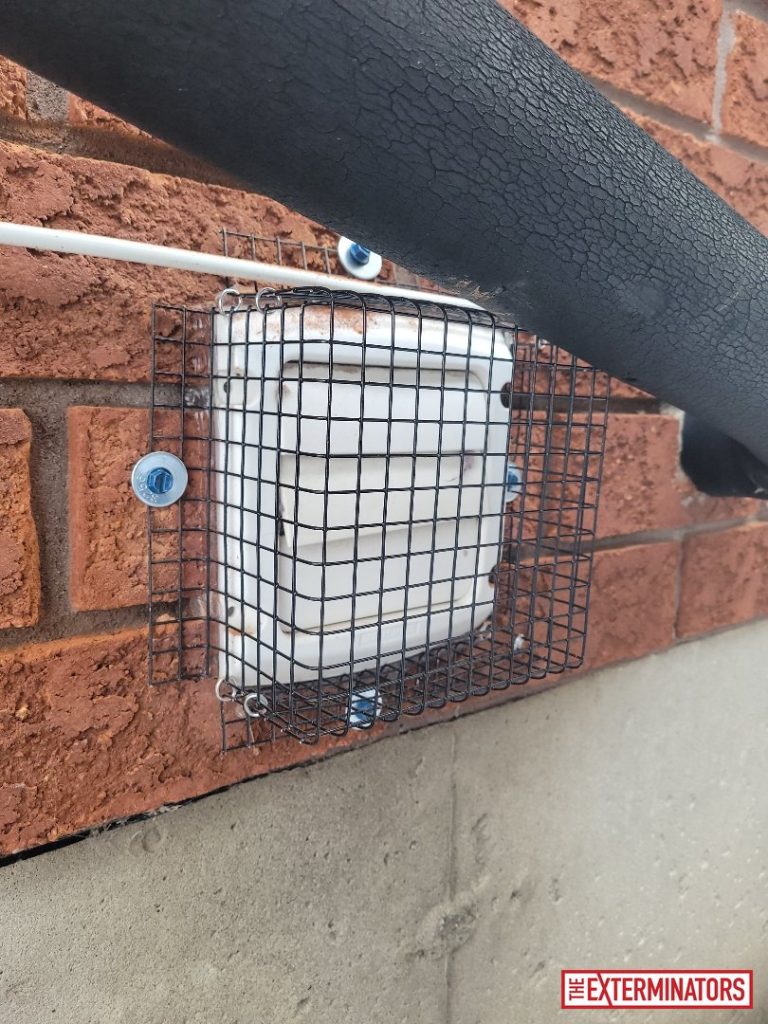
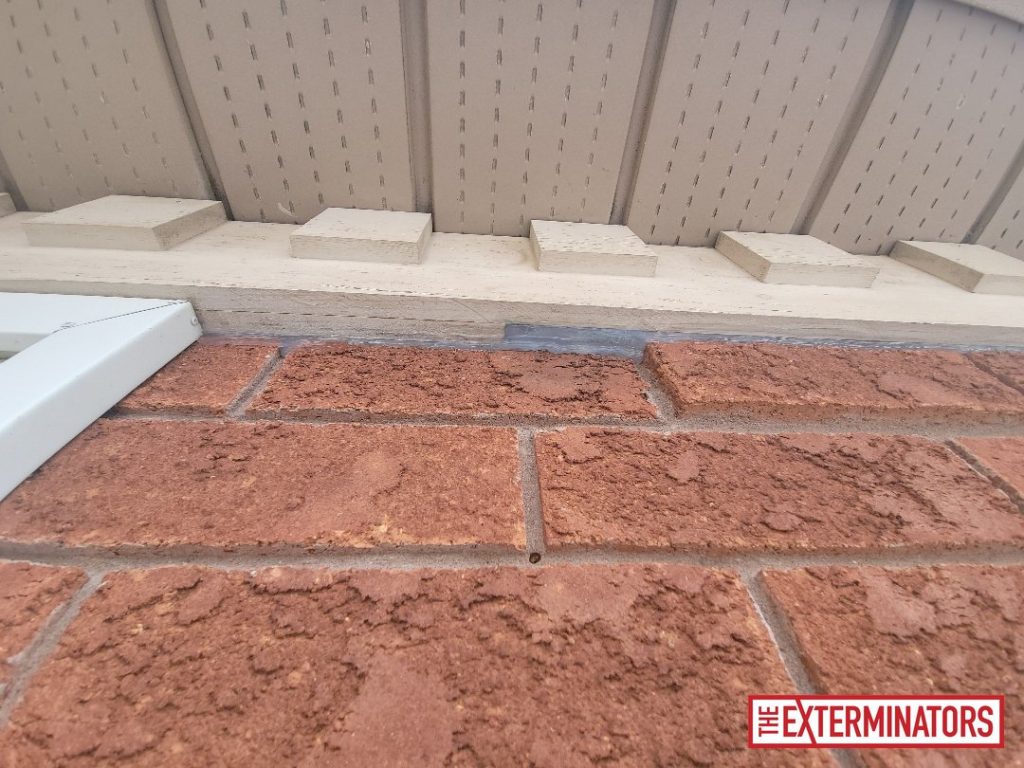
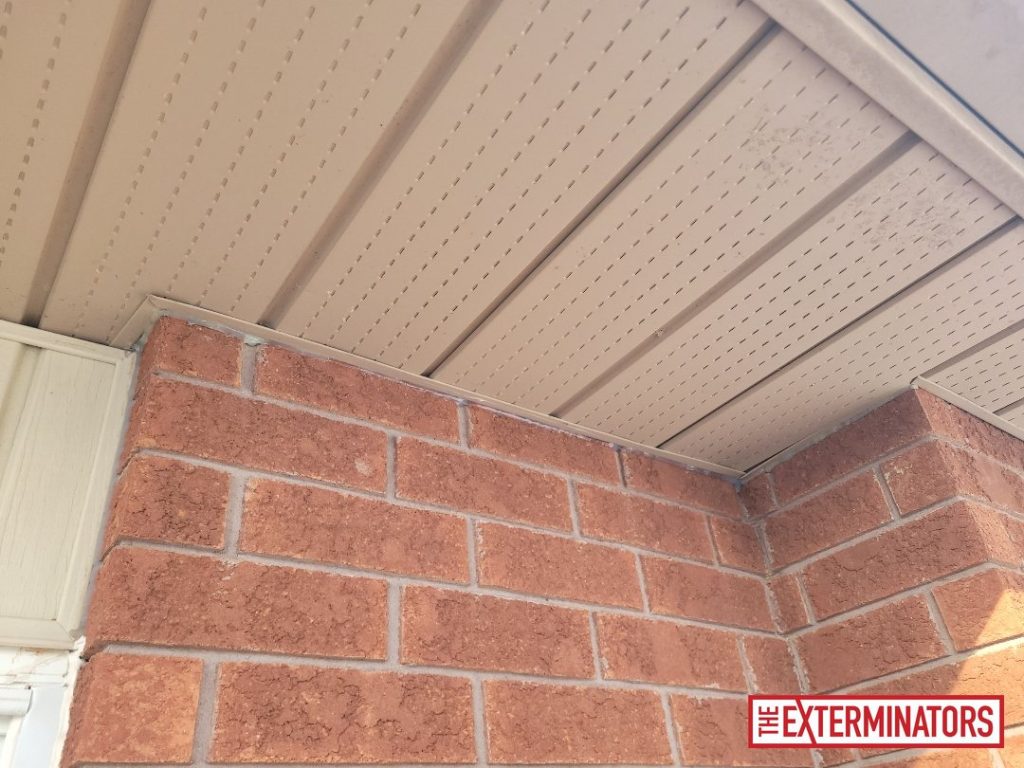
One image shows a visible gap in the brick mortar joint with nesting material protruding, indicating active use as an entry point. Additional images show open soffit returns where small gaps were present along the brick interface. A wall vent was observed without protective screening. Post-repair photos show galvanized steel mesh installed over the vent and sealed soffit transitions.
The weep vents were accessible; however, exclusion of those openings was quoted separately and not approved at that time.
Cause Analysis
Mice commonly enter homes through small structural gaps as temperatures fluctuate seasonally. Brick veneer construction with weep vents, soffit transitions, and wall penetrations can provide multiple accessible openings if not screened or sealed.
The combination of accessible soffit gaps and an unprotected wall vent created viable access points. Once inside wall cavities, mice can establish nesting areas and move throughout the structure.
Treatment / Removal
On Visit 1, we initiated interior mouse treatment. Tamper-resistant bait stations were placed in areas of confirmed activity.
The rodenticide used was commercial-grade and applied by a licensed exterminator in accordance with Ontario Ministry of the Environment guidelines. Mice feed on the bait and return to nesting areas, which helps reduce visible die-off in open living spaces.
Activity was monitored across subsequent visits.
Exclusion & Repairs
After receiving the emailed quote, the homeowner approved partial exterior exclusion work.
On Visit 2, we completed:
-
Installation of a galvanized steel cage over the accessible wall vent
-
Sealing of approximately 35 feet of soffit-to-wall gaps using galvanized steel mesh and exterior-grade silicone sealant
Images confirm tight mechanical fastening of the vent cage and sealed soffit seams to eliminate accessible gaps.
A separate quote was provided for sealing 21 weep vents; this work was not approved.
Outcome & Confirmation
By Visit 3, no further mouse activity was reported.
The installed exclusion measures were inspected and found secure and intact. Interior bait stations showed reduced activity levels consistent with population decline.
The homeowner confirmed satisfaction with the results. The job was considered complete at that time.
Technician Notes
Grant documented a high initial level of activity consistent with multiple entry points. Primary structural vulnerabilities were located along soffit returns and an accessible wall vent.
Exclusion work significantly reduced accessible openings. Remaining weep vents were left open per homeowner decision.
Monitoring confirmed treatment effectiveness and stabilization of activity prior to file closure.
This service was completed by our Peterborough Pest Control team. For Pest Control inquiries in Peterborough, contact 705-535-0854.